|
Introduction
If your home is old, the most difficult part of replacing a brick will be finding a matching brick. Chip out a piece and take it to a used brick dealer. Also note the face dimensions of the brick; sizes may vary substantially.
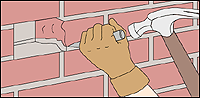
For the work, you will need mortar, a bricklayer's chisel, a heavy hammer or mallet, a trowel, and a tool for striking mortar joints. When working with the hammer and chisel, protect your eyes with goggles or safety glasses and your chisel hand with a leather work glove.
|
Upkeep is critical in a brick home
to prevent serious damage.
|

|
1. Remove the damaged brick
Chip out the damaged brick one piece at a time. Remove the old mortar, too. Thoroughly clean out dust and debris from the cavity.
|
|
|
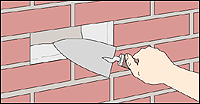
2. Lay fresh mortar
Dampen the surrounding bricks to retard water absorption from the mortar, then lay fresh mortar on the bottom and sides of the cavity.
|
|
|
3. Slide brick into place
Wet the brick, mortar its top, slide it into place, and pack mortar into the joints. Scrape off excess mortar.
|
|
|
4. Shape the joints
Match existing joints with the proper technique. Use a mason's jointer or a piece of pipe.
|
|