|
Introduction
Windowsills take a terrific beating. Rain not only hits them directly but also cascades onto them from windows and siding. Angled as they are, windowsills catch plenty of sunlight as well. This alternate soaking and baking process eventually makes them veritable sponges that can't hold paint for very long periods.
The best preventive is a couple of coats of paint applied annually. If a sill is too far gone for that, there are two alternatives. First, rebuild it with a fiberglass-type product made especially for the purpose. Second, install a new sill. Door sills, called saddles or thresholds, also fail over time. Replace either with the procedures described here.
|
Exterior door saddles (the bottom
sill) and window sills must be
replaced if they start to decay.
|
Determine if the sill or saddle fits under the jambs on either side, then measure, and buy a new piece. The drawings below show how to install a new piece of wood in either situation -- but you might opt to replace a saddle with a pre-formed, pre-drilled metal or plastic unit.
Remove the old saddle or sill. This probably will be the most difficult part of the job. Use a chisel or old screwdriver to probe for nails that may be holding the piece in place. If you can't get the nails out, in the end you simply may have to saw out a section, as shown below, or demolish it by splitting it along the grain with a hammer and chisel, then pulling out the splintered remains.
If you can get the old one out intact, use it as a template for marking the replacement. If not, measure carefully so you get a snug fit. Prime all sides and edges of a new sill before installing it.
|
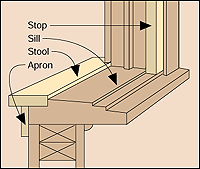
1. Remove trim
You'll probably have to remove the apron, stool, and stop molding to remove a sill. Pry out these pieces carefully to avoid damage.
|
|
|
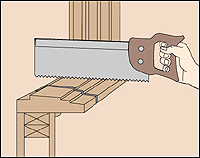
2. Saw out the sill
You may have to saw out a section from the center of the sill, then drive the end pieces inward. Use these as patterns for the new piece.
|
|
|
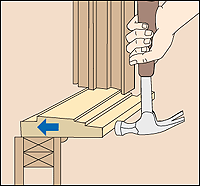
3. Put sill or saddle in place
Gently tap the new sill or saddle into place. Don't force it. If it resists, remove and sand the ends, beveling them slightly.
|
|
|
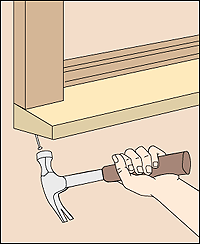
4. Secure the sill
Using rust-resistant nails, secure the sill from underneath. Countersink the nails, then caulk the nailheads and the ends of the sill.
|
|
|
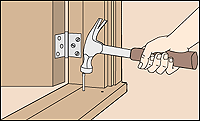
5. Secure the saddle
Nail a saddle at both ends and in the middle. Countersink and hide nailheads with putty. Caulk both ends of the saddle.
|
|