|
Introduction
Damaged masonry steps pose serious safety hazards. If you neglect repairs, you could end up replacing the entire structure. Clearly, it pays to attend to problems right away.
Some steps have a brick superstructure underneath and concrete treads. Others are all brick; still others are solid concrete.
With brick-and-concrete construction, you must guard against moisture getting into the mortar joints of the bricks. Repoint crumbling material and patch the treads as you would any concrete surface.
|
Brick steps are attractive, but
can be damaged by repeated
freezing and thawing.
|

To replace a broken brick, chisel out the mortar around it, chop out the pieces, and replace it. Repairs for solid concrete steps are shown in this section. Note that it's important to "undercut" old concrete so that the patch can get a secure hold. Use a cold chisel or brick chisel to do this, then thoroughly flush away debris with a hose. Keep the crack damp until you fill it.
For patching material, mix one part cement with three parts sand and just enough water to make it doughy. Or purchase special premixed patching compounds available in cartridges. Trowel this mixture into the damaged area, packing with the trowel's tip and smoothing with its edge.
To repair small chips, sections that are spalled, and other damaged areas that you can't undercut, use special epoxy patching cement mixed with sand according to the manufacturer's specifications.
|
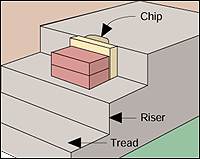
Gluing pieces into place
Often, you can glue pieces back in place with epoxy cement. Clean area, press piece in place, and hold with board and concrete block.
|
|
|
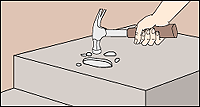
Using epoxy cement
Epoxy cement revives spalled surfaces, too. Clean away loose concrete, then trowel on mix, feathering the edges.
|
|
|
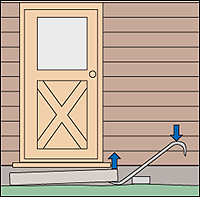
Leveling a settled stoop
Level a settled stoop as you would a slab. You may need a helper for the job and maybe a second wrecking bar.
|
|
|
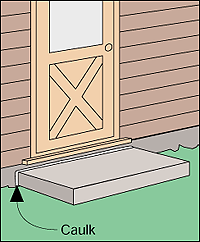
Sealing a stoop
Fill joint between foundation and stoop with concrete joint filler, latex caulk, or a filler like oakum, foam, or an asphalt expansion strip.
|
|
|
1. Repairing a broken edge
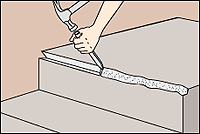
If an entire edge is broken, chisel a V groove along it to help hold the patch in place. Clean the area thoroughly, then wet.
|
|
|
2. Use a board as a form
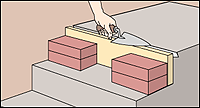
Press a board the height of the step against the riser to serve as a form. Apply concrete, packing groove full. Level with top of board.
|
|
|
3. Strengthen the repair
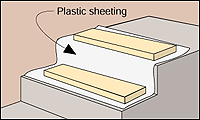
To strengthen the patch, keep it damp for about a week. Cover the repair with plastic sheeting and weight it down with scrap lumber.
|
|