Introduction
If you have eaves overhanging an exterior door, it makes sense to install a light there, where it will be better protected from weather than a wall-mounted unit would be. You're also likely to find it easy to run cable from an attic junction box to the eaves.
Consider installing a motion-detector floodlight. These are quite inexpensive, and if you wire it to be controlled with a regular wall switch, you can switch off the motion-sensing feature.
|
1. Cut a hole in the eaves
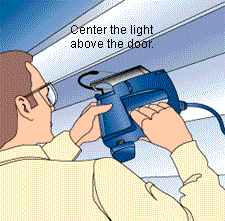
NOTE: Shut off the power. Draw an outline of the new box--a retrofit box with wings for attaching to the eaves will probably work best. Drill starter holes, and cut the hole with a sabersaw or a keyhole saw.
|
|
|
2. Run the cable, install the box
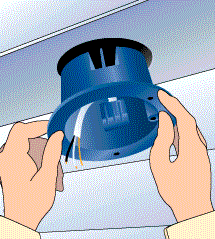
Fish cable and make connections to an interior switch (see pages Running Cable in Unfinished Space and Wiring Ceiling Fixtures with Switches, Related Projects). Connect the cable to the new box, and firmly attach the box to the eaves.
|
|
|
3. Wire the floodlight
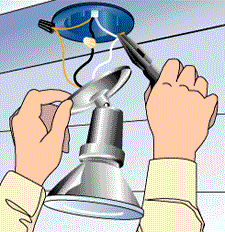
Connect the wires to the floodlight using wire connectors (see Connecting Wires, Related Projects), and screw the light firmly to the box. If your unit has a motion detector, wait until nighttime and adjust it so it turns on as people approach the door.
|
|
|
Tip: Installing a Low-Voltage Lighting System
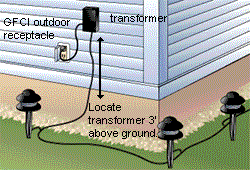
For highlighting your landscaping, the easiest and least costly alternative is low-voltage lighting. Kits containing 10 or more lights, a transformer, and lots of wire are inexpensive and readily available.
Installation is simple: Assemble the lights, and attach the cable. The lights usually can be poked into the ground, and you don't need to dig a trench for the wiring--just cover it with a bit of mulch. Fasten the transformer to a wall at least 3 feet above the ground, and plug it into an outdoor receptacle.
|
|