Introduction
The transition from theory to practice can be the most difficult phase of a deck-building project. This is the point where doubts may start to plague you.
- Will the deck be big enough?
- Can I really afford to build it?
- Do I have the skills needed to build a deck?
Listen carefully to the doubts and try to answer them thoroughly before proceeding. Don't rush into the project. Think through all of the procedures and consequences. If you've recently moved into the house, it might be too soon to build a deck. By waiting a full year, you'll have time to observe the house and yard through a full course of seasonal changes and weather conditions.
Budgeting is a tricky-and highly personal-part of the project. With thorough planning, however, you can avoid surprises. As long as you supply all of the labor, you can determine your out-of-pocket expenses by preparing a detailed list of materials (drawn from your equally detailed plans), which you can take to several suppliers for estimates. If your budget is tight, only you can decide if you want to borrow the money and build today or save your money and build tomorrow.
Deck building is straightforward work. But parts of it are physically demanding, and all of it requires close attention to detail. If you remain concerned about your ability to build the deck you want, narrow down those parts of the job that trouble you the most. Perhaps you worry about getting the ledger installed correctly or the posts set plumb and in a straight line. If so, take on the role of general contractor and subcontract parts of the job. You may be able to hire an experienced carpenter to do those segments of the job that you feel uncomfortable about. This mini-apprenticeship may be all you need to boost your confidence for tackling your next remodeling project.
No matter how long it takes, resolve your doubts before ordering lumber. Once that delivery truck backs into your driveway, you want to have a building permit in hand, a clear idea of what your deck will look like, and a plan for who's going to handle the work.
|
Keeping it legal
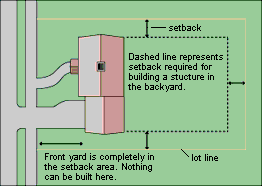
Like most major home improvements, a deck addition must be done in compliance with local building codes and zoning laws. Submit plans to your town or county building department for approval and to obtain a building permit. Depending on its policies, the building department also may require inspections to make sure you're following the approved plans. This legal supervision ensures that your design will be built properly. Remember, building codes prevent your neighbors from doing things you might not like. Failing to comply with codes could result in having to remove what you've built.
Not everyone is covered by zoning laws or required to get a building permit. But it's up to you, not the authorities, to find out what laws cover your project.
|
|
|
Playing it safe
The elements that make decks useful, fun, and good-looking, such as stairways, railings, multiple levels, hot tubs, or high elevations, also create safety hazards, especially for children. Complying with local building codes doesn't guarantee a safe deck. Legal requirements represent minimal standards; your situation may demand more. Minimize risks by observing these precautions:
|
|
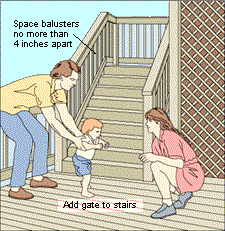
- When building a deck railing, space the balusters no more than 4 inches apart, even if your local code allows wider spacing.
- Treat deck stairs the same as indoor stairs; if young children are around, put a gate at the top and bottom.
- If you install built-in benches, make the railings behind them at least 24 inches above the seat to prevent a child from climbing or tipping over the side.
- Hot tubs should be fenced off with a childproof gate. If that's not practical, use a secured cover.
|
Making a trial run
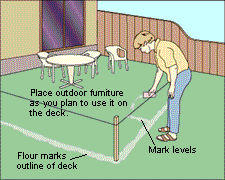
Mark the perimeter of your deck and its various levels with flour. Place your lawn furniture inside the perimeter to get a feel for how much space you need. Use strings to indicate railing heights. Set the string lines at the height of the proposed deck to give you a sense of its profile.
|
|